Player development
Training trade-offs
Choose useful training, manage fatigue and recovery, and read your committed training reports before increasing the workload.
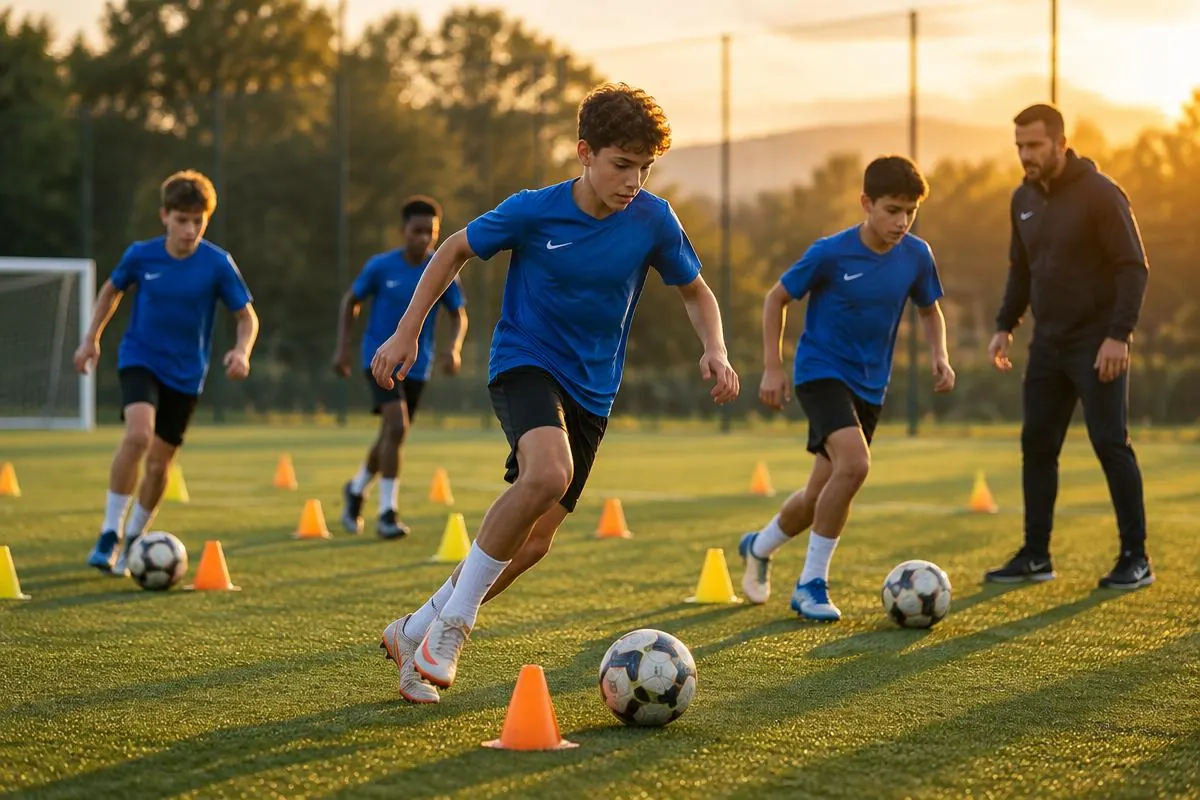
Give each training plan a purpose
Training is an investment in future performance, with a workload attached. Start by deciding what your squad needs: better defending, more reliable technique, goalkeeper development or recovery before the next match. Then select a focus that trains the relevant skills.
Balanced training is one option, not a promise to improve every attribute. Attack, defense, technique, fitness, goalkeeping, position and weak-foot work address different needs. Read the focus description and compare it with the player you are trying to develop.
A young player with room to develop and an older player close to their potential do not have the same growth prospects. Age, headroom, coaching, facilities, workload and fatigue all contribute to the training calculation. Improvement is not guaranteed in every session.
More intensity has a cost
Increasing intensity can improve the opportunity for skill growth, but it also changes the condition workload. Already tired players are less productive in training. Simply leaving intensity at its maximum can turn a development plan into an availability problem.
Under the current training rules, intensity above 75 can trigger an overload injury, with existing fatigue contributing to that risk. This is a specific training risk, not a statement that lower intensity removes every possible cause of injury in the game.
Consider two players before an upcoming fixture: a tired regular starter and a rested young reserve. The right decision may be to protect the starter's availability while choosing useful development work for the reserve. Use the controls actually available for the first team and academy; do not assume every setting is individual.
Rest is part of the plan
The Rest focus restores condition instead of increasing playing attributes. An injured player also does not receive ability growth from that training batch. Recovery days therefore need a different success measure from development days.
If your next match matters more than another attempt at a skill increase, review condition before increasing the workload. Watch the trend over several committed sessions rather than reacting to one unchanged rating.
Fitness and fatigue are different values. Read both for your own players where the game provides them. Public squad information about an opponent is not a substitute for private condition data and should not be treated as such.
Use coaching and academy plans deliberately
A coach's quality, specialty and load control contribute to training. In worlds using coach training rules v1, communication and philosophy add their own effects. Check the coach information shown on your server rather than assuming a single bonus applies everywhere.
Academy players can follow their own plans, including a plan that follows the club focus. Check those choices separately from the first team. A club-wide change should not be your only review of what a developing academy player needs.
Training facilities help development, but a construction project is a financial commitment. Compare the quoted cost and completion time with the rest of your club's plans. An upgrade does not turn every later training attempt into a guaranteed gain.
Judge the committed report
Use the training report to review actual committed skill changes and the coaching context saved with that session. A current player rating alone cannot tell you which changes came from training, a match or another part of the game.
Scheduled sessions run through the server's daily process. Reopening a report does not create another training session. Read the schedule on your current server and use the in-game completion information before deciding that a session is missing.
- Choose a focus for a specific squad or player-development need.
- Review fatigue, fitness and upcoming availability before raising intensity.
- Review first-team and academy plans separately.
- Compare committed reports over time, then adjust one part of the plan.