Club management
Club business
Plan ticket income, merchandise, marketing and infrastructure while keeping enough Rise (CR) for your club's commitments.
Know which money you are spending
ClubRise uses Rise (CR). Your president's wallet and your club's cash are separate balances. Acquiring a club does not deposit the acquisition price into the club's operating account; investing afterward is a separate decision.
Owner investment is capital, not proof that the business is profitable. Read the ledger to understand where money came from and which commitments it must cover. EU and Asia progress independently, so do not assume a balance or an investment on one server also exists on the other.
For a simple planning example, a club with 500,000 CR considering a 200,000 CR project would have 300,000 CR before other costs. That arithmetic is a starting point, not a claim that 300,000 CR is a safe reserve for every club. Review your actual wages, maintenance and other obligations.
Ticket price and attendance belong together
A higher ticket price is useful only if the resulting demand still produces the income you need. Capacity sets a limit on attendance; it does not guarantee that every seat will sell. Review actual attendance and ticket receipts together.
For illustration, 1,000 tickets at 20 CR produce the same gross ticket revenue as 800 at 25 CR: 20,000 CR. These are hypothetical figures, not a prediction from the game's demand model. Use your own club's receipts when deciding what to change.
A stadium upgrade can increase capacity, but it also ties up capital and can affect ongoing maintenance. Compare the displayed quote, the expected completion date and your present demand before building for a crowd you do not yet have.
Merchandise turns cash into stock first
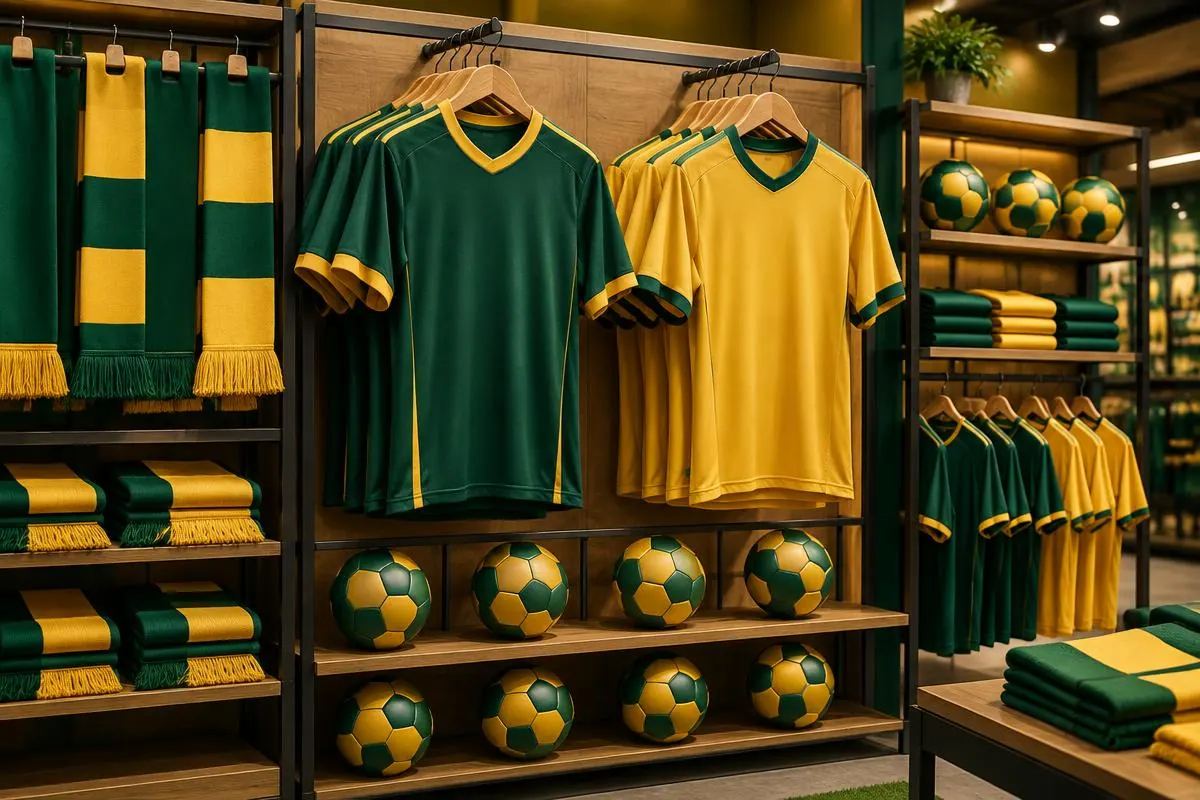
Merchandise has production costs, inventory and sales. Producing more shirts spends money before those shirts are sold. Plan quantities against demand and leave enough operating cash for the rest of the club.
Read sales income alongside cost of goods sold. Recorded cost basis explains the cost of sold stock; it is not an instruction to subtract the same production payment from cash a second time. The finance ledger is more useful than judging the shop from sales revenue alone.
Player-branded products require an eligible player when starting production. Existing printed names and historical production costs remain attached to the goods after later changes. Review available stock before starting another batch just because your squad has changed.
Give every investment a reason
Marketing can support club or player popularity and demand, but a campaign has its own price and eligibility conditions. Read its current quote and duration. Higher popularity is not a guarantee of a winning team or an immediate profit.
Choose infrastructure around a bottleneck you can identify: training needs, academy development, actual stadium demand, shop capacity or another supported club activity. Starting several projects at once can leave a club short of cash even when each project appears useful on its own.
Use the costs, deadlines and effects displayed by your current world. Older prepaid projects can retain earlier rules, so two projects should not be assumed identical just because their buildings have the same name.
Keep a repeatable business review
Before committing more money, compare your cash with what is already promised. Auctions and private offers can hold funds while a decision is pending. Treat a pending commitment as part of your plan, not as money you can freely spend again.
Use the server schedule for financial processing and competition events. This guide explains a decision process; it does not replace the live quotes, eligibility checks or receipts that authorize a purchase in the game.
- Separate president capital from club operating income.
- Compare actual ticket and merchandise receipts with their associated costs.
- Account for held transfer funds, wages, maintenance and ongoing projects.
- Choose one investment with a clear purpose and keep a reserve based on your own obligations.